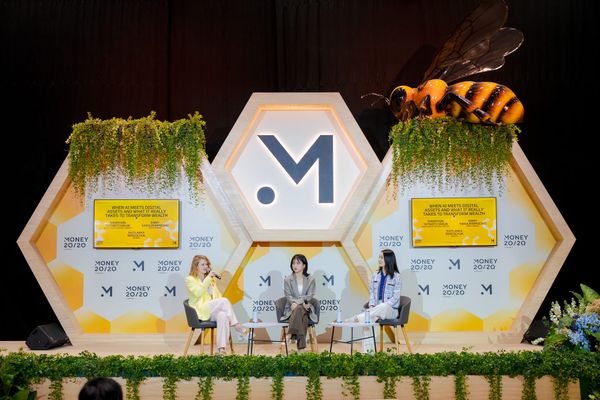
Before going to Money20/20 Asia, I expected a strong regional fintech event. What I did not expect was the scale and the energy I witnessed. Over 4,000 people discussing how money moves, cutest robots delivering M2020 merch around the venue, fintech founders running between meetings with iced coffees in their hands, and networking nights that somehow looked more like music festivals than financial conferences.
Asia has a very special fintech energy to it. Things feel less theoretical there, less of a “future vision deck”, more of an actual execution. In many areas, Asia is setting the direction in fintech. Below, I have listed key points from the grounds of Money 20/20 that I took back with me.
Super Apps Conversation
In North America, we love talking about the “financial super apps”. Every second fintech wants to become the next everything-app, advertises it as a major pivot… before turning the initiative down for multiple reasons. In reality, the market in North America is still heavily fragmented. People use one app for payments, another for investing, another for budgeting, another for loyalty. The “super app” here is mostly still a strategy slide.
In Asia, it is already daily life.
You order, pay, borrow, invest, collect rewards, transfer money, chat with support, and sometimes even interact with government services, all inside one ecosystem.
One of my favourite sessions on the matter was Garry Sien’s talk: “Beyond the Super-App: The AI-Driven Platform-as-a-Service Model for Global Finance.”
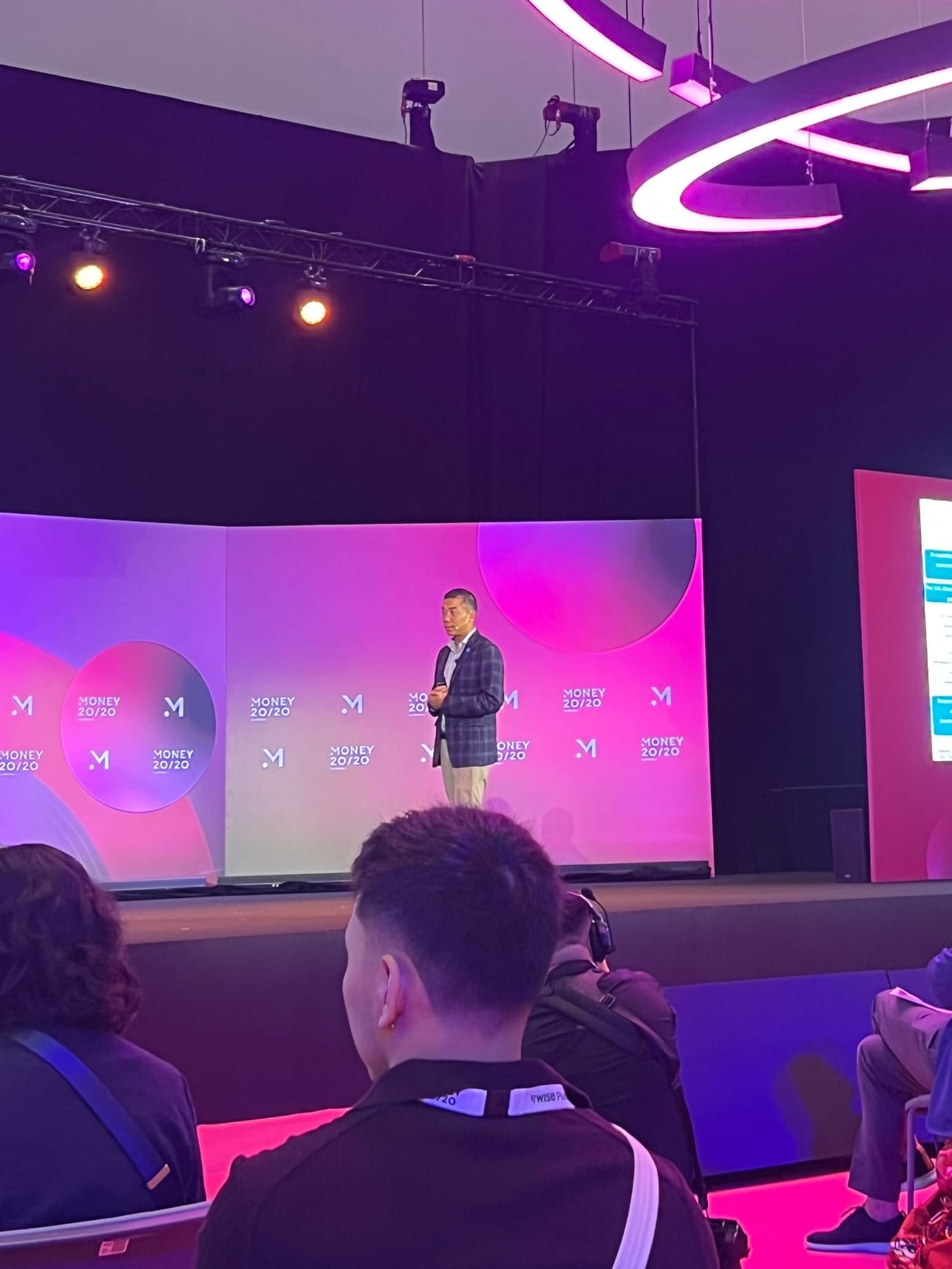
What I liked was that he was talking about the infrastructure underneath the super apps. Through Ant Digital Technologies, they are building technology layers that allow these ecosystems to exist:
● ZOLOZ for AI-powered identity verification and fraud prevention
● mPaaS, basically infrastructure born from Alipay’s architecture
● AntChain for blockchain-powered financial services
● Agentar for low-code AI agents inside financial institutions
My takeaway here was simple: the next generation of fintech winners should build products along with ecosystems and infrastructure layers.
And this is where the next trend is coming up.
Intelligent infrastructure
Another phrase that stayed with me came from a panel on intelligent infrastructure.
In the Western world, we usually ask: “Build or buy?”
At Money20/20 Asia, the question sounded different. More often it was: “Build or partner?”
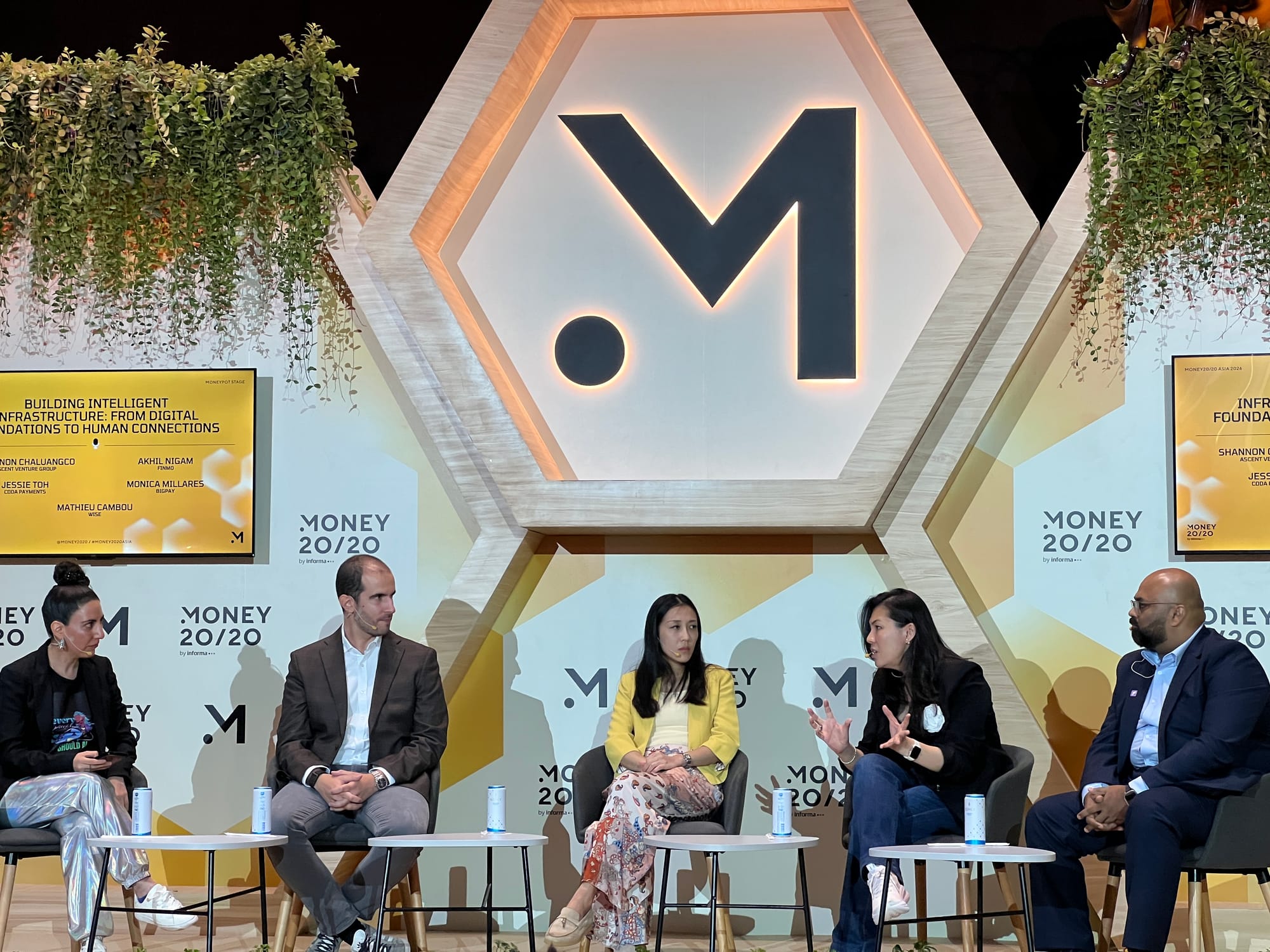
And I liked this framing much more. Mathieu Cambou from Wise answered this question very directly during the panel facilitated by BigPay’s Monica Millares: partner. Not because companies suddenly became less ambitious, rather because modern financial infrastructure is becoming too interconnected to build everything yourself.
Payments connect to lending. Lending connects to loyalty. Loyalty connects to commerce. Commerce connects to AI. AI connects to fraud prevention. And suddenly you are assembling an ecosystem based on what works the best for your consumers.
This was one of the strongest themes across the whole event.
Fintech vs AI
AI, of course, was everywhere too. Compared to many Western conferences, I noticed a difference here as well though: the discussions were mostly focused around where AI is already quietly entering production.
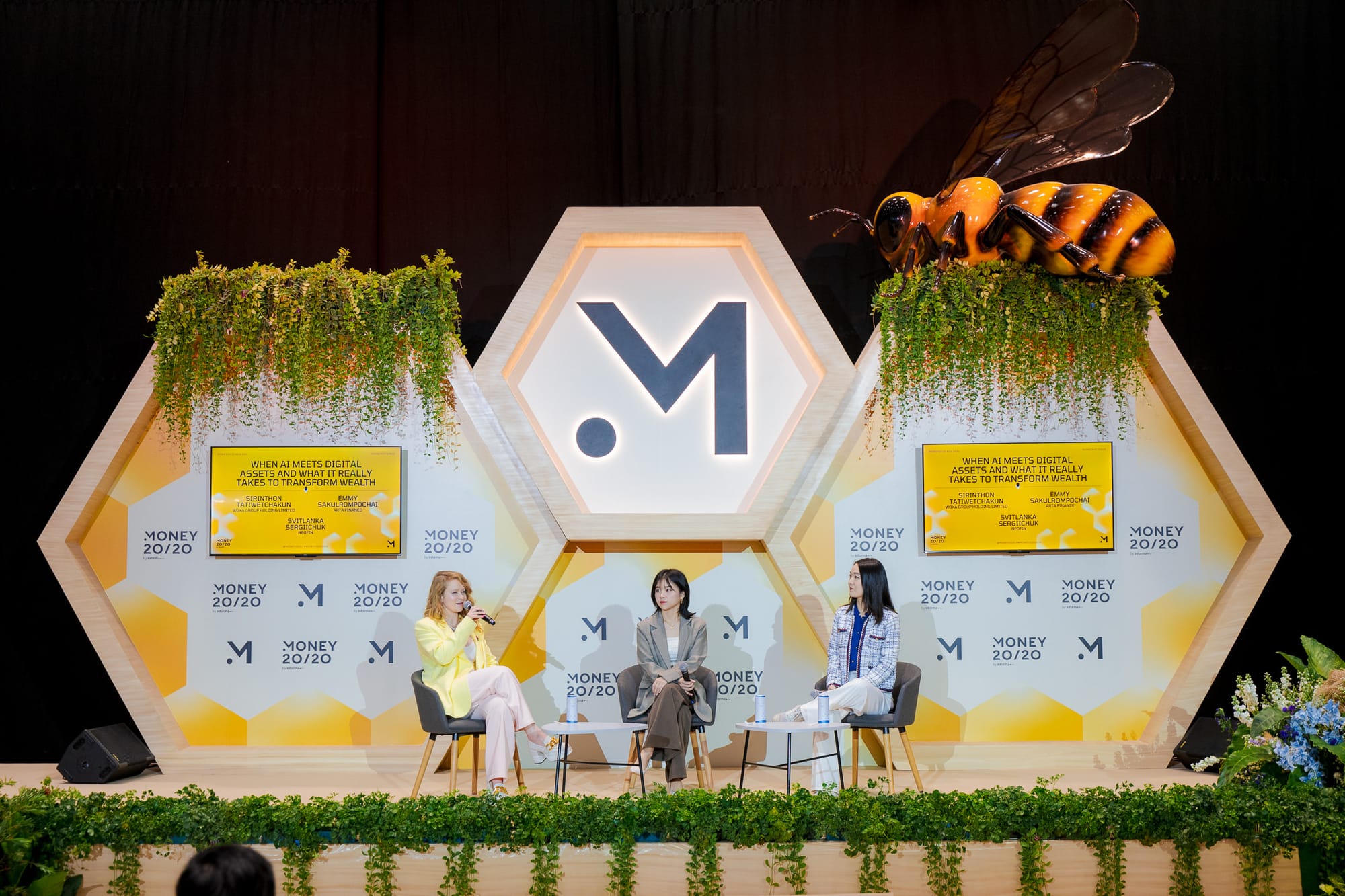
I had a chance to facilitate a panel on AI in digital assets and wealth together with Sirinthon Tatiwetchakun from Woxa and Emmy Sakulrompochai from Arta Finance. One thing became very clear during the discussion: in wealth management, AI only matters if it actually removes friction. Nobody cares that your chatbot is intelligent if advisors still cannot trust the outputs or explain them to clients.
At another stage, Trulioo’s Zac Cohen was discussing agentic commerce, with AI actively performing actions and participating in financial flows.

And then there was one statement from the banking track that perfectly summarized where the industry is moving: being a digital bank is no longer enough, because the next generation is AI-native banks.
SME lending
This topic felt very close to home because at Neofin, we spend a lot of time thinking about how lending infrastructure evolves.
The panel “Winning the SME Lending Market with Real-Time Data” showcased a very visible shift happening across Southeast Asia. SME lending is finally moving away from endless documents, manual reviews, and slow approvals. The direction now is: cashflow-based underwriting, real-time data, faster decisioning.
The Philippines market examples from Tala, OPAL Portfolio Investments, and Fuse Financing showed just how fast this modernization is already happening.
TradFi vs DeFi
Probably the most fascinating part of the whole conference for me was how naturally TradFi and DeFi conversations blended together.
This year Money20/20 had a dedicated Intersection Stage. Still, the topic was not limited to one stage at all. You could hear stablecoins, tokenized assets, on-chain liquidity, and digital collateral being discussed literally in networking lines and coffee conversations.
Asia seems much more open to experimenting with different forms of value and assets.
One of the moments where I genuinely stopped and thought “only in Asia” was discovering Public Gold. A Shariah-compliant physical gold trading platform. Sounds interesting already, right?
But then I learned they operate gold ATMs across Malaysia. Actual ATMs where you can withdraw physical gold bars from 0.5g to 100g. And not just one experimental machine somewhere in a mall, over 150 of them!
Asia really does not stop impressing me with how differently financial products can be packaged and adopted.
Industry nights
And of course, no Money20/20 experience is complete without the industry nights.
Bangkok definitely understood the assignment here too.
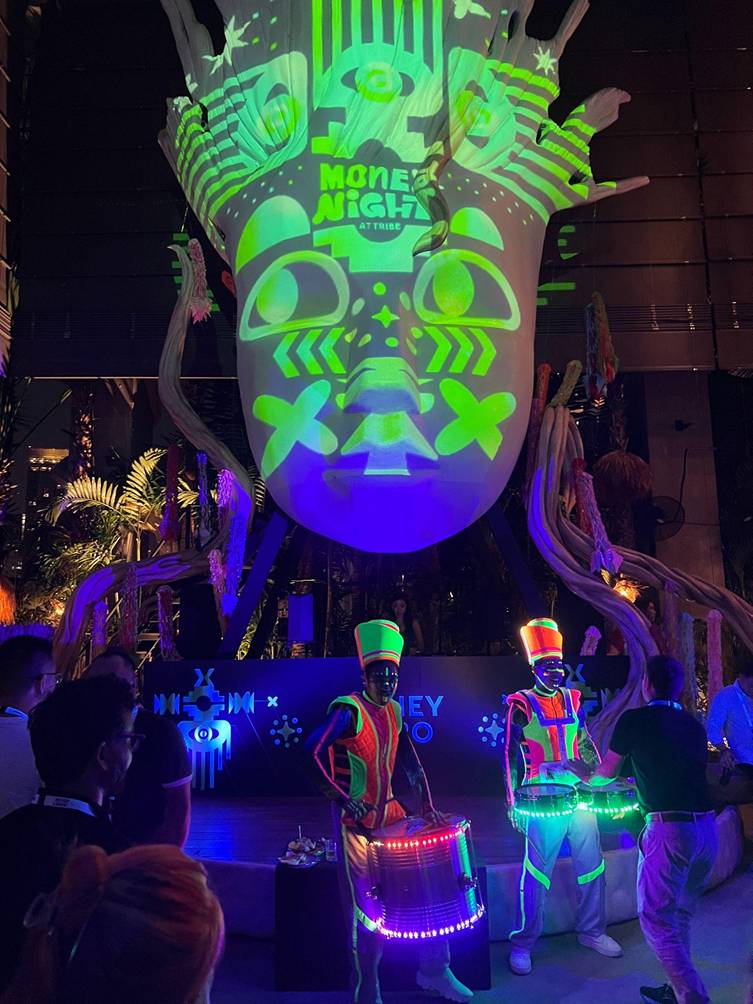
One evening ended at Tribe with views over the skyline, sculptures, lights, drummers, and several hundred fintech people discussing infrastructure, stablecoins, fraud prevention, and fundraising while holding cocktails somewhere above Bangkok traffic.
Now the Bangkok dust is finally wiped off the shoes, the business cards are sorted, and the follow-up emails are getting answered. Which means only one thing: time to get ready for the next money show!
Author: Svitlanka Sergiichuk, Fintech Track Leader at UAtech & Co-Founder of Neofin