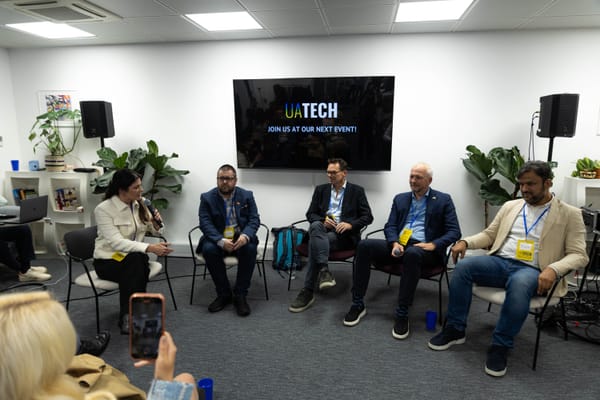
Established companies with proven products and multi-year track records are facing a distinct set of challenges due to the rapid adoption of Agentic AI. Unlike early-stage ventures, these scale-ups must integrate new artificial intelligence capabilities while simultaneously managing strict regulatory compliance and maintaining client trust.
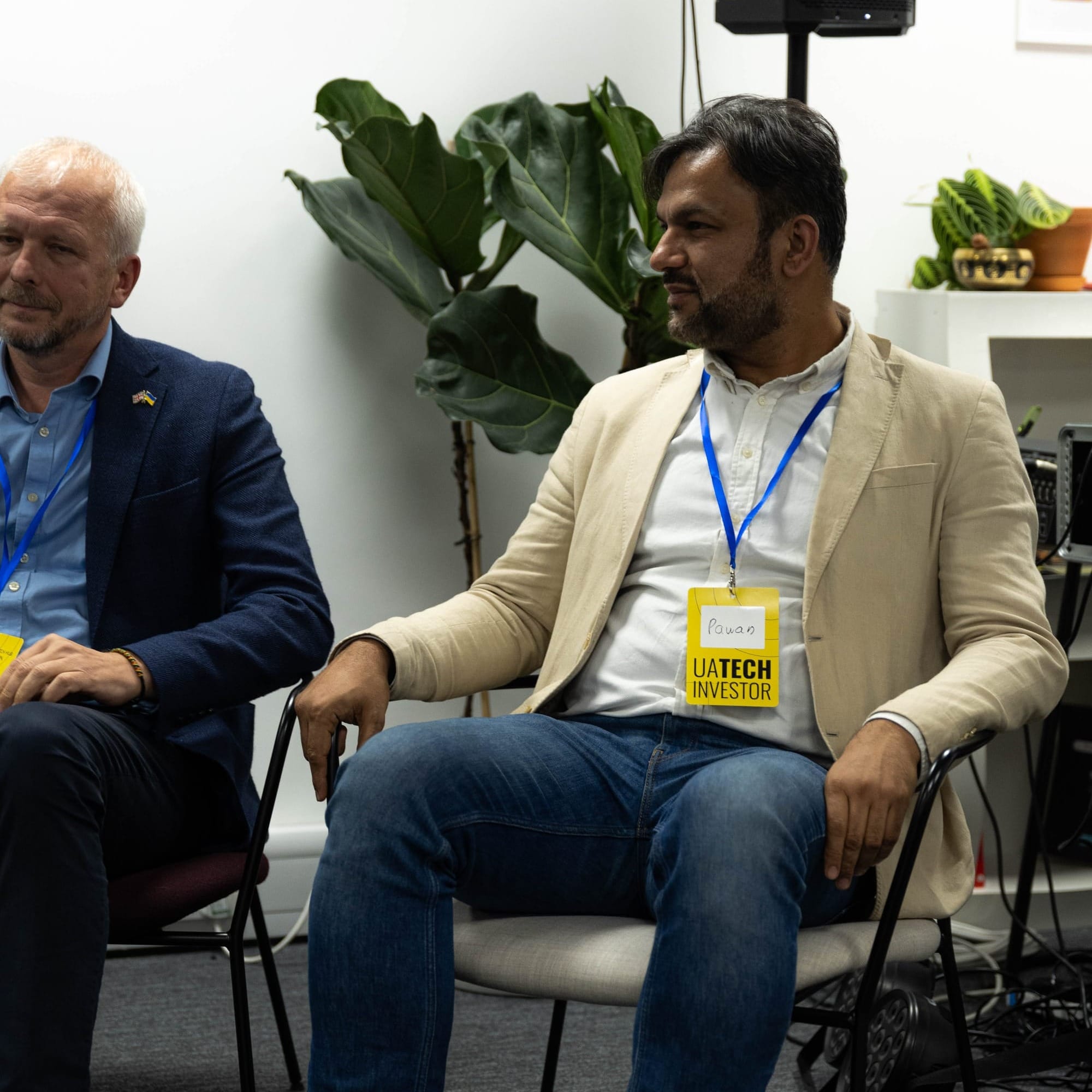
To examine these issues, Olena Bilan moderated a discussion with Pawan Lokwani (Co-Founder, HR Tech); James Lee(VP EMEA Origination, WeFi Technology Group); Yan Manka (Director, Mastercard); and Andriy Kolodyuk (Founder, AVentures Capital).
Business Outcomes and the Reality of Scale
While new competitors often use terms like "Agentic AI" to attract investment, established scale-ups face a different reality. Pawan Lokwani, Co-Founder of an HR Tech, notes that while the market is "happy to talk about tech," purchasing decisions are strictly driven by business outcomes.
"For us, the business outcomes are: time to hire, cost of hiring reduction, bias reduction… Those are really hard-hitting key KPIs that you just can't [hit] just by saying 'Oh I have an Agentic AI solution".
Beyond the initial sale, the primary challenge becomes technical scalability. Pawan Lokwani (Co-Founder, HR Tech) suggests that relying on standard APIs from platforms like OpenAI is only effective for smaller datasets. For a professional product to succeed, it must be capable of processing millions of profiles without failure.
"When you have to scale it for a number of customers again and again, it needs to work in a very seamless fashion," Pawan Lokwani explains, emphasizing that the technology must remain cost-effective at high volume.
Regulation as a Market Filter
The implementation of the EU AI Act is often dismissed as bureaucracy, but for scale-ups, it has become a hard commercial reality. Compliance is no longer just a legal safety net; it is a prerequisite for closing enterprise deals.
Despite this short-term friction, strict regulation ultimately serves as a necessary market filter. It eliminates unreliable actors and validates companies that have the infrastructure to adapt.
"I would say it kind of separates boys from men. So it gets an opportunity for scale-ups like us,"
Pawan Lokwani states.
However, this "one-size-fits-all" approach creates dangerous vulnerabilities in the defense sector. While dual-use technologies face strict barriers, hostile actors operate without such constraints. Andriy Kolodyuk (Founder, AVentures Capital) argues that Western security companies require regulatory "sandboxes" to innovate fast enough to counter these threats .
"Our adversaries is not using any ethics at all,"
Kolodyuk warns.
The Human Factor: Decision-Making Under Pressure
Scaling a company places immense pressure on leadership. When asked how to handle critical business situations, Pawan Lokwani (Co-Founder, HR Tech) emphasizes a strict boundary: never make decisions when exhausted.
"I would say... don't deal it in the night. At least I switch off," Pawan Lokwani advises.
Beyond rest, the key is avoiding isolation. James Lee (VP EMEA Origination, WeFi) suggests that the only way to solve an ad-hoc crisis is to step back and seek a second opinion.
"I always find talking amongst a group or a team or a mentor... helping you think, take a step back, get a different perspective," James Lee states.
Pawan Lokwani (Co-Founder, HR Tech) adds that these advisors don't need to be official corporate mentors:
"You don't have to define them very formally. They can be your friends"
Conclusion
The transition from startup to scale-up is less about technological breakthroughs and more about stability. Whether it is delivering consistent business outcomes, navigating the EU AI Act, or managing team culture, the winners are those who can stabilize the chaos.
Olena Bilan (Former CFO & Transformation Leader) suggests that instead of viewing these external forces as obstacles, leaders must treat them as inevitabilities to be managed.
"First of all, you don't need to fight... Second, you better predict," Bilan concludes . "Even in some countries [where regulations] don't exist, they will. It's a question of time".
Co-Authors: Yuliya Dmytryshyn, Strategic Advisor at UAtech, and Erika Danaikanych